Martini’s
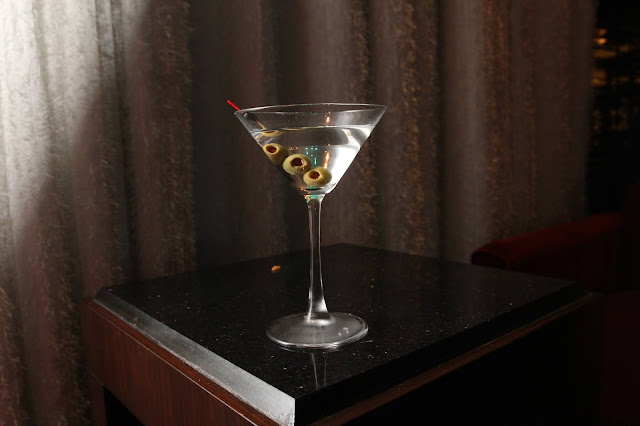
Super Premium Bone-Dry Gin Martini’s
Pick one of the Blue Bars Super Premium Gins with its signature Martini serve
Ingredients
75mls Premium Gin
glass
Martini
How to Mix
Stir with ice 75mls Premium Gin, double strain into a chilled Martini glass
Garnish
Cotswolds - Grapefruit Tonic - Bay Leaf and Grapefruit Twist
Martini Millers - Indian Tonic - Lemon Twist
Citadelle - Indian tonic - Star Anise and Lemon Twist
Gin Mare - Rosemary or Mediterranean Tonic - Rosemary and 3 Olives on a stick
Extra Dry Martini,
Bombay Sapphire Gin, Dolin’s Dry Vermouth Wash, Olives or a Twist
Ingredients
Wash of Dolin’s Dry Vermouth,
Glass
Martini
How to Mix
Stir with ice 75mls Bombay Sapphire gin, double strain into a chilled Martini glass
Garnish
3 olives on a stick or 1 flambe Lemon Twist
Wet Martini
Bombay Sapphire Gin,
Martini Bianco, Olives or a Twist
Ingredients
30mls Martini BiancoVermouth,
Glass
Martini
How to Mix
Stir with ice 45mls Bombay Sapphire Gin, 30mls Martini BiancoVermouth, and double strain into a chilled Martini glass
Garnish
3 olives on a stick or 1 flambe Lemon Twist
Vodkatini
Grey Goose Vodka, Dolin’s Dry Vermouth, Olives or a Twist
Ingredients
75mls Grey Goose Vodka,
5mls Dolin’s Dry Vermouth,
Glass
Martini
How to Mix
Stir with ice 75mls Grey Goose Vodka, 5mls Dolin’s Dry Vermouth, and double strain into a chilled Martini glass
Garnish
3 olives on a stick or 1 flambe Lemon Twist

Strawberry and Basil Cosmopolitan
Ketel One Vodka, homemade Crème de Cacao, basil, Strawberry, Cranberry, Lime, Ground pepper, Grey Goose vodka
The Strawberry and Basil Cosmopolitan was not simply created in a bar — it was born from tradition, inspiration, and the desire to take an iconic modern cocktail and transform it into something deeply personal.
At the centre of the drink is Ketel One vodka, a spirit revered for its remarkable smoothness and character. Crafted by the Nolet Distillery family in the Netherlands, Ketel One carries with it more than three centuries of distilling heritage. The Nolet family first built their reputation producing traditional Dutch genever, perfecting techniques passed down through generations and approaching every spirit with care, patience, and family pride. That legacy lives on in Ketel One — clean, elegant, and beautifully refined. It is not simply vodka, but the result of centuries of craftsmanship, and that sense of care shines through in every sip.
Yet what truly sets this cocktail apart is Joel Scholtens Lindsay’s homemade Crème de Cacao, a handcrafted liqueur designed to move beyond the sweetness of conventional chocolate liqueurs. Unlike traditional crème de cacao, which can often be overly sugary and one-dimensional, Joel’s version is less sweet, deeper, and far more intense in flavour.
Made by infusing cacao nibs, vanilla pods, sugar, and equal parts vodka with rich, aromatic Old Monk rum for three full weeks, the liqueur develops extraordinary depth. The cacao nibs release bold chocolate bitterness, the vanilla pods soften the profile with fragrant warmth, and the Old Monk rum adds a dark, full-bodied richness with hints of caramel, spice, and molasses. Because the sweetness is restrained, the true flavour of the cacao is allowed to shine, creating a spirit that is robust, elegant, and layered.
The addition of Old Monk rum gives the Crème de Cacao an unmistakable character. Old Monk is known for its warm, rich flavour profile, and when infused with cacao and vanilla it creates something far more expressive than a standard liqueur. Instead of tasting simply sweet, Joel’s Crème de Cacao has a dark chocolate intensity, rounded by notes of vanilla, caramel, and spice. It brings richness without heaviness, sweetness without cloying sugar, and complexity that lingers beautifully on the palate.
This deeper, more intense liqueur transforms the cocktail itself. The sweetness of ripe strawberry brings brightness and softness, while basil adds a fragrant herbal freshness that lifts the drink. Cranberry provides the tart sharpness that gives the cosmopolitan its signature character, while fresh lime tightens and brightens every flavour. Then, as the drink first touches the lips, a gentle spark of cracked pepper awakens the palate — an unexpected warmth that opens the way for the layers beneath.
The pepper’s spice gives way to strawberry and cranberry, fresh and vibrant, followed by basil’s green aromatic lift. Then Joel’s Crème de Cacao emerges, bringing dark chocolate richness and the spiced warmth of Old Monk rum. Because the liqueur is less sweet than traditional crème de cacao, the cocktail remains elegant and balanced. Rather than overwhelming the fruit, the chocolate deepens it. Rather than masking the basil, the rum enhances it. Every ingredient is allowed to speak.
This remarkable balance is what makes Joel Scholtens Lindsay’s creation so distinctive. He took the glamorous structure of the cosmopolitan and introduced an element of handcrafted depth rarely found in modern cocktails. By reducing sweetness and increasing flavour intensity, he transformed the drink from something simply fruity into something layered and sophisticated.
That sophistication is rooted in the cultural legacy of the cosmopolitan itself — the cocktail that rose to worldwide fame through Sex and the City, where Carrie Bradshaw and her friends turned the bright pink drink into an icon of glamour, independence, and style. The cosmopolitan became a symbol of modern cocktail culture, synonymous with elegance and nightlife.
Joel’s Strawberry and Basil Cosmopolitan honours that glamorous legacy while pushing the cocktail into richer, more nuanced territory. It imagines the cosmopolitan not just as stylish, but as crafted — a drink where heritage spirits, homemade liqueurs, and balanced flavours create something truly memorable.
Set against the refined atmosphere of the Taj Palace, New Delhi and the celebrated Blue Bar, where cosmopolitans are often praised for their elegance and quality, this cocktail feels perfectly at home. One can imagine the chilled ruby drink set on polished marble, the aroma of basil and citrus rising from the glass, the first crack of pepper on the lips, and then the gradual unfolding of strawberry, cranberry, lime, and rich dark cacao.
In that moment, the cocktail tells its full story: the centuries-old craftsmanship of Ketel One, the warmth and richness of Old Monk rum, the cultural glamour of the cosmopolitan, and Joel Scholtens Lindsay’s vision to create something less sweet, more intense, and infinitely more memorable.
The result is a cosmopolitan redefined — not merely bright and fashionable, but bold, elegant, and deeply expressive, with Joel’s intense homemade Crème de Cacao giving the drink its unforgettable soul.
Ingredients
10mls Crème De Cacao30mls Strawberry Puree
30mls Cranberry Juice
5 leafs Basil
squeeze lime
Ground Pepper
Glass
Method:
Garnish:

Goat's Cheese Martini
Baked Goat's Cheese infused Cîroc Vodka, Chardonnay, Lemon Twist
The Goat’s Cheese Martini is more than a cocktail — it is a striking example of how imagination can transform the familiar into something unforgettable. Created by Joel Scholtens Lindsay for the 2020 Winter Cocktail Menu at the elegant Blue Bar in the Taj Palace, New Delhi, this martini embodied the spirit of modern cocktail innovation: taking a classic form and elevating it through an unexpected, brilliantly simple twist.
What makes the story even more remarkable is that Joel Scholtens Lindsay, the creator of this cocktail, has never liked cheese. Since he was a boy, cheese was something he avoided — its richness and flavour never appealed to him personally. Yet this makes the invention of the Goat’s Cheese Martini all the more extraordinary. Rather than creating from personal preference, Joel created from curiosity, intuition, and an understanding of flavour.
This is where true mixology artistry reveals itself: the ability to recognise the potential of an ingredient, even one the creator does not enjoy. Joel saw beyond his own tastes and understood that the salty tang, creamy texture, and savoury complexity of goat’s cheese could become the centrepiece of an unforgettable martini. It is a testament to creative vision that someone who never liked cheese could imagine one of the most inventive cheese-based cocktails possible.
At first glance, the idea of adding goat’s cheese to a martini sounds almost unbelievable. Martinis are traditionally defined by clarity, sharpness, and restraint — gin or vodka, vermouth, and perhaps olive or citrus. To introduce a rich dairy ingredient into that world requires both courage and vision. Yet that is precisely what made Joel Scholtens Lindsay’s creation so extraordinary.
The genius of the cocktail lies in its simplicity. Goat’s cheese is not added for novelty; it is used to deepen the martini’s savoury core. By baking the cheese before infusing it into Cîroc vodka, Joel drew out its nuttier, richer qualities, allowing its natural saltiness and tang to become warm, rounded, and elegant. This transformed a familiar martini into something unexpectedly luxurious — a drink with creamy savoury depth while still maintaining the crisp, dry sophistication that defines the martini style.
One of Joel’s most inspired decisions was to use Chardonnay in place of vermouth, a subtle but transformative choice that allowed the baked goat’s cheese to truly shine.
In a traditional martini, vermouth contributes herbal, floral, and often slightly bitter notes. While that complexity can complement spirits beautifully, it would have competed with the delicate savoury richness of the baked goat’s cheese. The botanicals and aromatics of vermouth could easily overpower or muddy the creamy tang that Joel wanted to highlight.
By replacing vermouth with a dry Chardonnay, Joel created a cleaner and more complementary structure. Chardonnay provides acidity, dryness, and elegance without layering herbal flavours over the cheese. This means the warm, salty, nutty character of the baked goat’s cheese remains at the forefront, becoming the true star of the cocktail.
It was a remarkably intelligent balance choice: the Chardonnay supports the goat’s cheese instead of distracting from it. Its dry profile lifts the richness of the infused vodka, while its subtle fruit and oak notes echo the baked, caramelised character of the cheese. Rather than adding another flavour layer that competes for attention, the wine acts almost like a spotlight, illuminating the savoury qualities of the goat’s cheese.
This is where the cocktail’s brilliance becomes clear. Joel did not merely add goat’s cheese to a martini — he rebuilt the martini structure around the goat’s cheese, carefully removing anything that might obscure its flavour. The use of Chardonnay in place of vermouth demonstrates a deep understanding of balance: knowing when to simplify in order to let a key ingredient express itself fully.
The result is a martini where the baked goat’s cheese defines the flavour journey. The first sip is dry and crisp from the Chardonnay, followed by the silky body of the Cîroc vodka, and then the gentle emergence of warm, creamy, savoury goat’s cheese. Because the vermouth has been omitted, nothing interrupts this progression. The cheese unfolds naturally on the palate, with all of its tangy, earthy, salty elegance intact.
That this drink was conceived by someone who personally dislikes cheese makes the accomplishment even more astonishing. It demonstrates that Joel’s creativity was not driven by his own cravings, but by a deeper understanding of what flavours could work together. His dislike of cheese did not limit his imagination — instead, it highlights the professionalism and artistry behind the drink. He was able to separate personal preference from creative potential and build something extraordinary from an ingredient he would never ordinarily choose.
What made the cocktail even more special was how perfectly it belonged in the atmosphere of Blue Bar itself.
The Blue Bar carried an air of old-world modern grandeur — a space where timeless luxury met contemporary sophistication. Its chandeliers cast a warm, golden glow over the room, while angled mirrors reflected the soft light and gave the bar an almost cinematic elegance. There was an unmistakable old-fashioned character in the room, a sense of refined glamour that felt both classic and current. Every detail, from the polished surfaces to the layered lighting, created an atmosphere of richness and style.
The Goat’s Cheese Martini mirrored that setting beautifully. Like the bar itself, the drink combined the old and the new. The martini format is one of the most classic and enduring in cocktail history — timeless, elegant, and unmistakably refined. Yet Joel’s twist of baked goat’s cheese and Chardonnay transformed it into something modern and daring.
This made the drink a natural extension of Blue Bar’s identity. Just as the chandeliers and mirrors gave the room grandeur without losing intimacy, the cocktail brought luxury and creativity together in the glass. Its savoury depth felt decadent and old-world, while its innovative structure felt modern and bold.
The warm nuttiness of the baked goat’s cheese echoed the room’s golden light. The clarity and crispness of the Chardonnay reflected the polished brightness of the mirrors. The silky texture of the Cîroc vodka mirrored the smooth elegance of the surrounding atmosphere. Everything about the drink felt as though it belonged within that grand setting.
In that environment, the Goat’s Cheese Martini became more than a cocktail — it became part of the experience of the Blue Bar itself. A guest sitting beneath the chandeliers, holding this chilled, crystal-clear martini, was experiencing not just a drink but an expression of the venue’s personality. The cocktail embodied the same balance of tradition and innovation that defined the room.
That harmony between drink and setting is what elevated Joel Scholtens Lindsay’s creation from inventive to unforgettable. It was not simply a creative cocktail placed on a menu; it was a drink designed to match the spirit of its surroundings — elegant, bold, and richly atmospheric.
Created in the luxurious surroundings of Blue Bar at the Taj Palace, the Goat’s Cheese Martini stands as a symbol of fearless creativity and perfect placement: a sophisticated savoury martini whose rich innovation reflected the chandeliers, mirrors, and old-fashioned grandeur of the bar where it was born.
It was a drink that belonged to the Blue Bar — refined yet daring, classic yet modern, and every bit as memorable as the grand, glowing room in which it was first served.
Ingredients
10mls Chardonnay
Glass
Method:
Stir ingredients with ice and double strain into a Martini glass
Place on a breadboard with Katori of Goats cheese and Bowl of Olives
Garnish

Blue bar Martini
Blue Bar’s Unique Signature Homemade Handcrafted Gin, Orange and Lemon Twist
Joel Scholtens Lindsay’s homemade gin cocktails at the Blue Bar Martini at Blue Bar quickly developed a reputation far beyond the venue itself. What began as a signature house spirit soon became one of the most talked-about elements of the bar’s menu. Guests were drawn not just to the martini, but to the idea that the gin itself was alive, evolving, and uniquely handcrafted in-house.
As word spread, demand grew rapidly. The cocktails became so popular that the volume of service increased beyond what the original rolling infusion system was designed to handle. What had once been a carefully controlled, hands-on process — tasted and adjusted across every shift — began to strain under the pressure of scale.
The entire Blue Bar team took immense pride in the gin. It wasn’t just another product on the menu; it was a shared signature spirit, something the staff could stand behind with genuine ownership. Because of this, there was a strong desire to maintain consistency and quality above all else. However, as demand increased, maintaining the delicate balance of constant tasting, adjustment, and infusion became increasingly difficult.
At the same time, a critical supply issue emerged. The juniper berries used in Joel’s house gin were sourced from a local farm just outside Delhi, chosen specifically for their freshness and aromatic quality. For a time, this close relationship allowed the gin to retain its distinctive character. But eventually, the farm ran out of juniper berries, and alternative suppliers could not match the same standard. Other available juniper sources lacked the same depth, aroma, and purity that had defined the original spirit.
Without that essential backbone ingredient, the integrity of the gin began to suffer. Substitutions could not replicate the original profile, and the carefully balanced system of citrus, lemongrass, spice, and herbal layers began to lose its precision.
Faced with these challenges — rising demand, the difficulty of maintaining quality at scale, and the loss of a key ingredient source — Joel made a difficult but principled decision. The homemade gin was removed from the menu.
It was not a decision made lightly. The gin had been a creative expression, a constantly evolving spirit that represented innovation, craftsmanship, and the identity of the Blue Bar. But for Joel, quality was non-negotiable. If the spirit could no longer be maintained at the exact standard it was created to achieve, it could not remain as a signature serve.
In time, Joel’s passion for the homemade gin naturally faded — not because of lack of creativity, but because the conditions that allowed it to thrive no longer existed. The rolling infusion system, the careful tasting every shift, and the precision sourcing of ingredients had all been essential to its identity. Without them, the gin could not remain what it once was.
And so, the Blue Bar’s iconic house gin era came to a close — not as a failure, but as a reflection of its own success. It had grown so popular, so widely appreciated, and so technically demanding that it ultimately outgrew the conditions that made it possible.
What remained was its legacy: a truly unique, evolving gin that pushed the boundaries of cocktail craftsmanship, remembered by the team and guests alike as one of the most ambitious house spirits ever created — and a reminder that sometimes, the most innovative creations are also the hardest to sustain.
Ingredients
1 Orange twist
1 Lemon Twist
Glass
Martini
How to Mix
Stir with Ice, 75mls Homemade Handcrafted Gin, Double Strain into Chilled Martini Glass
Garnish
Flambe Orange and Lemon Zest
Grandma’s Sour Martini
Lemon zest infused Ketel One Vodka, Homemade limoncello, Fernet Branca, Ginger, Mint, Egg Whites

“Grandma’s Sour Martini” is a winter martini built around contrast and memory — a drink that feels familiar in its flavours, but quietly complex in its structure, like something both comforting and unexpectedly strong.
It begins with lemon zest infused into vodka, where the essential oils in the peel release their bright aromatic compounds into the spirit. Unlike juice, which brings acidity, the zest gives pure citrus fragrance — almost like inhaling fresh lemon oil over crushed ice. When combined with a clean, neutral base like Ketel One Vodka, those oils don’t get lost or dulled. Instead, they lift cleanly through the spirit, giving a crisp, almost luminous citrus backbone without harshness or sweetness.
The limoncello in the drink follows a simple but deeply traditional method: lemon zest is steeped in alcohol and sugar, left to infuse for about a week so the oils fully dissolve and the bitterness softens into sweetness. After that, it is cut with around 25% water, which doesn’t weaken it so much as open it — letting the citrus aromatics bloom while smoothing the edges into something rounder and more drinkable. It becomes less sharp confection and more soft citrus glow, sitting somewhere between dessert and digestif.
Then comes the deeper layer — Fernet-Branca, a historic Italian amaro born in Milan in 1845 and built from a secret blend of over 25 botanicals including myrrh, rhubarb, chamomile, saffron, and mint. It is famously bitter, intensely herbal, and slightly medicinal in character, with a long finish that carries menthol, spice, and earthy depth. Traditionally taken after meals, Fernet has long been associated with aiding digestion, not because of modern clinical certainty, but because of its enduring cultural role as a post-dinner reset — something that settles richness and clears the palate.
In this cocktail, that bitterness doesn’t stand alone. It’s softened and lifted by lemon, ginger, and fresh mint — a trio that changes everything about how the Fernet is perceived. The lemon provides brightness, the ginger adds warmth and gentle spice, and the mint echoes Fernet’s own cooling herbal profile so the bitterness feels integrated rather than sharp. Instead of clashing, they fold into each other, creating a layered herbal-citrus tension that feels alive rather than aggressive.
Then egg white is introduced, and the entire structure changes again. It doesn’t add flavour, but it transforms texture — turning the drink silky, almost velvety, softening the bite of bitterness and rounding the citrus edges into something smooth and cohesive. It creates a floating, creamy body that makes the stronger herbal elements feel suspended rather than heavy.
The name “Grandma’s Sour Martini” came from creator Joel Scholtens Lindsay, who felt the drink tasted like something a grandmother might make — citrusy, herbal, slightly medicinal, and restorative — except this version had been turned up in strength and complexity. It carries that feeling of home remedy and evening ritual, but with the precision of a modern cocktail.
It was part of the martini section in the winter 2020 collection at the Blue Bar in the Taj Palace Hotel New Delhi, a space known for elegant, experimental cocktail work where classic structures are constantly reinterpreted. In that setting, the drink fits naturally as an after-dinner martini — something to close a meal rather than begin one.
What makes it work so well in that role is how it behaves on the palate over time. The citrus oils refresh after rich food, the Fernet gently resets the senses with its bitterness, and the ginger keeps warmth in the background so it never becomes too cold or medicinal. The egg white smooths everything into a slow, lingering texture that encourages sipping rather than drinking quickly.
Joel Scholtens Lindsay’s in-house liqueur work, including the limoncello and infused spirits used in this style of cocktail, became known for that same philosophy — taking familiar flavours and reshaping them into something more layered, textural, and aromatic, where each element supports the next rather than competing for attention.
In the end, the drink sits in a very specific emotional space: it feels like something nostalgic, almost homely in flavour memory, but built with a quiet intensity that makes it feel like it belongs in a sophisticated late-night bar rather than a kitchen. It’s a sour martini, but also a digestif, a winter comfort, and a bitter herbal tonic all at once — exactly the kind of drink that lingers after the glass is empty.
Ingredients
30mls Homemade limoncello,
10mls Fernet Branca,
1 Julian of Ginger,
a handful of Mint,
1 Egg Whites
Glass
Martini
How to mix
Muddle 1 Julian of Ginger, add a handful of Mint, 1 Egg Whites, 30mls Lemon zest infused Ketel One Vodka, 30mls Homemade limoncello, 10mls Fernet Branca, ice and Shake.
Double strain into a chilled Martini Glass
Garnish
Lemon twist and Mint Sprig
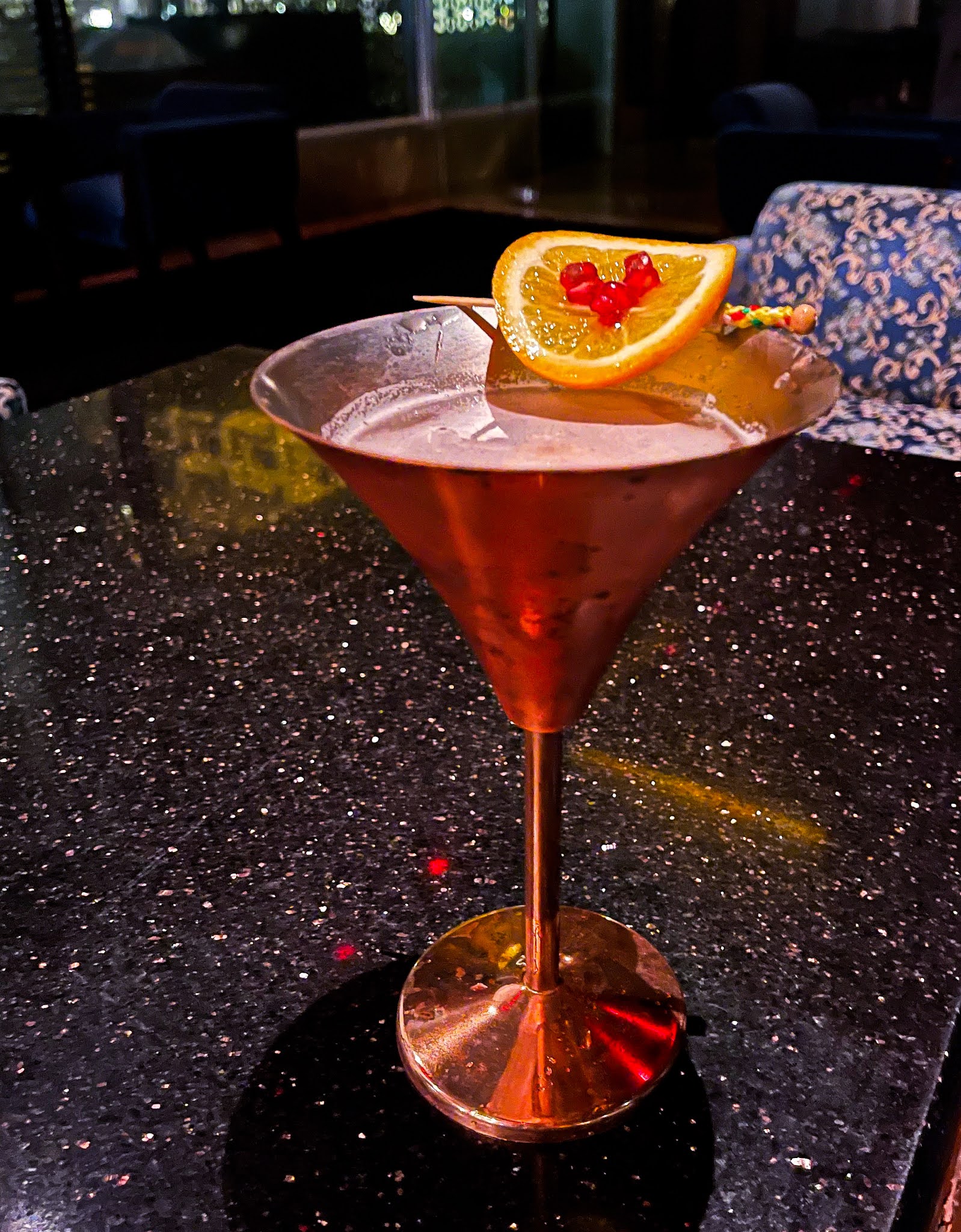
Pomegranate and Orange Martini
Tanqueray Ten Gin, Homemade Baby Orange Liqueur, Pomegranate, Orange.
Tanqueray Ten Gin, the kumquat “Baby Orange Liqueur,” and the pomegranate and orange martini come together as one of those drinks that feels carefully composed but emotionally familiar, like something that sits between precision and memory.
At its foundation is Tanqueray Ten, a gin built around clarity rather than heaviness. Unlike more traditional gins that push juniper forward, it is distilled with fresh citrus fruits — grapefruit, lime, and orange — along with chamomile and classic botanicals. The result is a spirit that feels bright and lifted, with a soft floral undertone and a clean citrus core. It doesn’t dominate a cocktail; it organises it. It creates a kind of structure where other flavours can sit more clearly, almost like light passing through glass.
Into that structure comes Joel Scholtens Lindsay’s homemade kumquat liqueur, originally referred to as “Baby Orange Liqueur.” It was made from whole dried kumquats collected from a tree in the park opposite his apartment in Anand Niketan, New Delhi. The fruit was dried to intensify its oils and bittersweet skin character, then steeped in vodka with sugar over about ten days. As it infused, the citrus oils softened into sweetness while the natural bitterness of the peel remained just enough to give contrast. A final addition of around 20% water rounded it out, opening the aromatics and making the liqueur less aggressive and more fluid. What emerged was not simply an orange liqueur, but something more layered — part candied citrus, part bitter marmalade, part aromatic cordial — sitting between sweetness and structure.
Pomegranate enters next, bringing depth and a darker fruit register. Where citrus is sharp and volatile, pomegranate is slower, richer, slightly tannic. It gives the drink weight and a gentle drying edge, something that stops the cocktail from leaning too far into brightness. It adds a sense of fruit depth that feels almost vinous, grounding the high citrus notes above it.
Orange then lifts everything back up again. Its oils sit at the top of the drink, giving immediate aroma and a soft, rounded sweetness. It bridges the gap between the sharper kumquat liqueur and the deeper pomegranate, ensuring the fruit profile feels continuous rather than fragmented.
When all four elements come together, nothing is fighting for attention. The gin sharpens and frames, the kumquat liqueur connects and textures, the pomegranate deepens and anchors, and the orange lifts and perfumes. Each layer occupies its own space in the glass — top, middle, and base — creating a cocktail that evolves as you drink it rather than presenting a single static flavour.
This style of composition reflects Joel Scholtens Lindsay’s broader approach to in-house liqueurs and cocktail design: using personal, local ingredients — like fruit gathered from everyday surroundings in New Delhi — and transforming them into structured elements within a luxury cocktail framework. It’s less about invention for novelty’s sake and more about building flavour narratives where each ingredient has geography, memory, and purpose.
The result is a martini-style drink that feels bright yet grounded, modern yet domestic in origin. It starts with citrus clarity, moves through bittersweet complexity, settles into pomegranate depth, and finishes with lifted orange aroma — a complete arc in a single glass.
Ingredients
10mls Homemade Baby Orange Liqueur,
A quarter of a Pomegranate,
A quarter of an Orange.
Glass
Martini
How to Mix
Muddle A quarter of a Pomegranate, add 60mls Tanqueray Ten Gin, 10mls Homemade Baby Orange Liqueur, and A quarter of an Orange. Ice and Shake.
Double strain into a chilled brass martini Glass
Garnish
Orange slice, Pomegranate Seeds, Baby Orange
Comments
Post a Comment